
Accounting
The ledger where the business already is
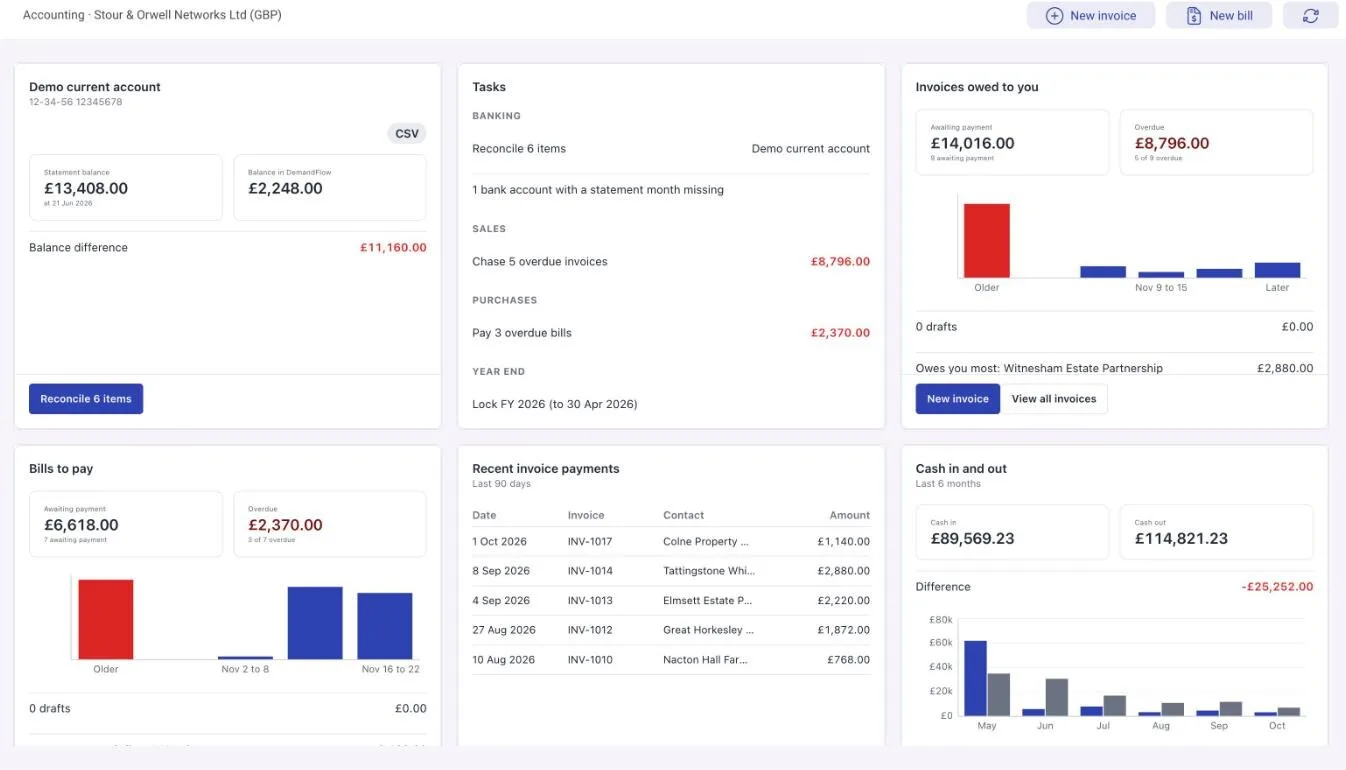
Sales invoices, bills, credit notes, bank accounts, reconciliation, VAT, fixed assets, financial years and reports run on the same records as the CRM, projects and people, for every company in the tenant. One posting service writes every journal, checks every balance and respects every lock date, so the trial balance is right by construction and the year end is a wizard rather than a scramble.
The Challenge
The accounts live in one tool and the business in another
Customers are keyed twice, once in the CRM and once in the ledger. The invoice goes out from a system that knows nothing about the project it bills for, the bank statement is matched by hand, and the year end is a trail of exports, spreadsheets and emails to the accountant.

Double keying
The same customer, supplier and person exist in the CRM, the vendor list and the accounts package, with different names and no reference between them.

Reconciliation by hand
Statement lines are matched one at a time, the same payee is coded again every month, and the statement balance is never proved against the ledger.

Year end as a scramble
Bank balances, unreconciled lines, draft invoices and the trial balance are checked by eye, and the accounts and tax computation are assembled outside the system that holds the numbers.
Sales invoices and bills
Invoices from the records you already have
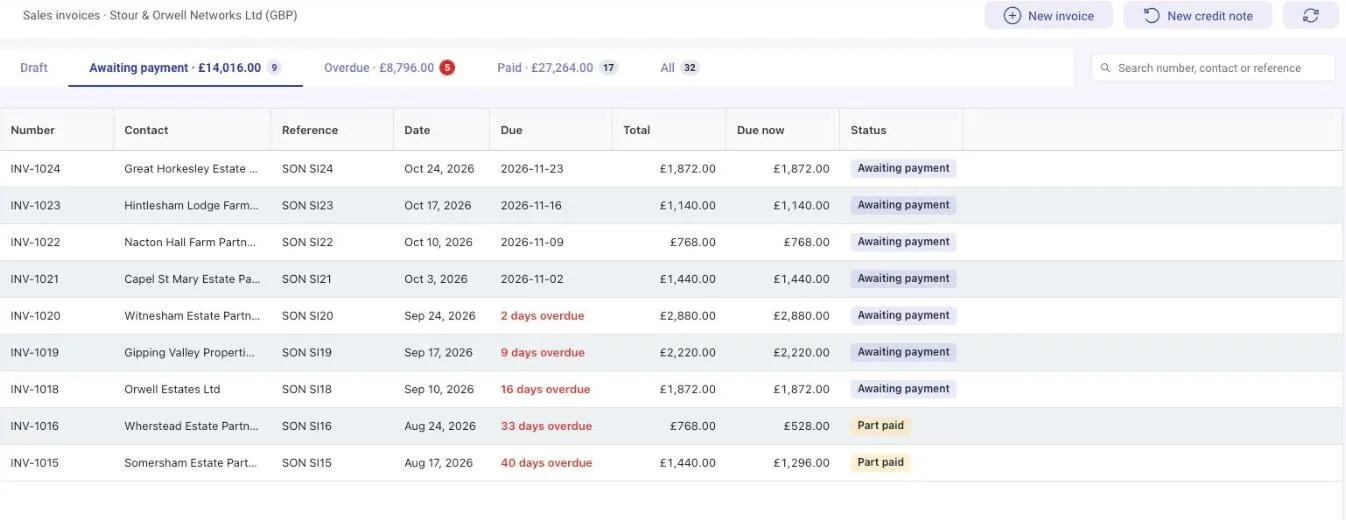
One screen serves sales invoices and bills. An invoice has a contact, a reference, issue and due dates, a payment term, a currency and rate, and lines with quantity, unit price, discount, account and tax code. Drafts are saved freely. Approval computes the totals from the lines, posts debtors or creditors and the VAT control, and takes the invoice number atomically from the company sequence, so two users cannot issue the same number. Invoice PDFs are drawn by the platform and emailed to the contact from the record.
- Customers and suppliers are the company and people records of the CRM, flagged as accounting contacts
- Credit notes against the invoice they credit; one payment settling several invoices from one bank line
- Foreign currency invoices and payments with the realised difference posted automatically
- Business numbering per company with prefix, suffix, year and month tokens, padding and yearly or monthly reset
Bank and reconciliation
Reconciliation that suggests the answer
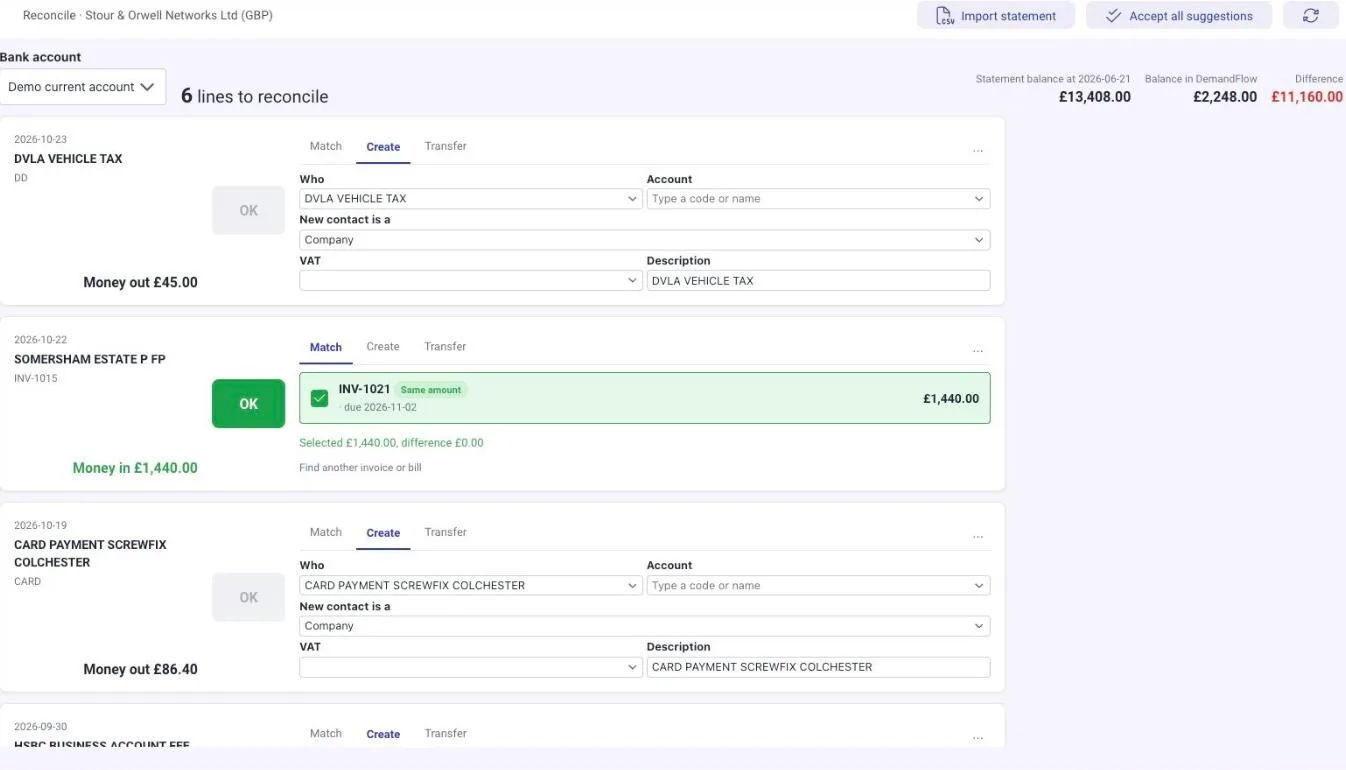
Statement lines arrive by CSV import, with the column map remembered per account and a dedupe key that stops a file being imported twice, or from a live Mercury feed polled every night. The reconcile screen shows one card per unreconciled line with Match, Create and Transfer tabs and an Exclude. Match offers the open invoices or bills first, then journals, with a suggested match when the amount agrees. Create is pre-filled from a bank rule or from the payee history, and a new payee can have its contact and account created in place. Accept all suggestions clears the routine lines in one click.
- Bank rules by text, direction and priority with auto-accept, learned from the first time a line is coded
- Monthly statement balance proved against the ledger, visible on the home page and in the year end check
- Manual journals on a line grid with live totals; reversal swaps the lines and marks the original reversed
- Fixed assets with straight-line depreciation posted monthly, net book value and disposals with gain or loss
Periods, VAT, year end and reports
A ledger that cannot go out of balance, and a year end that is a checklist
Each company has its own financial years with a lock date; the posting service refuses anything outside an open year or on or before the lock date, and every unlock is logged. VAT returns compute the nine boxes from the ledger with periods and deadlines per company. The year end wizard walks through Check, Lock, Accounts, Tax and File: it lists bank balances, unreconciled lines, drafts, the trial balance and account mapping, locks the year, and builds FRS 105 iXBRL accounts and a CT600 computation from the mapped chart, with the Companies House, corporation tax and US deadlines stamped on the year.
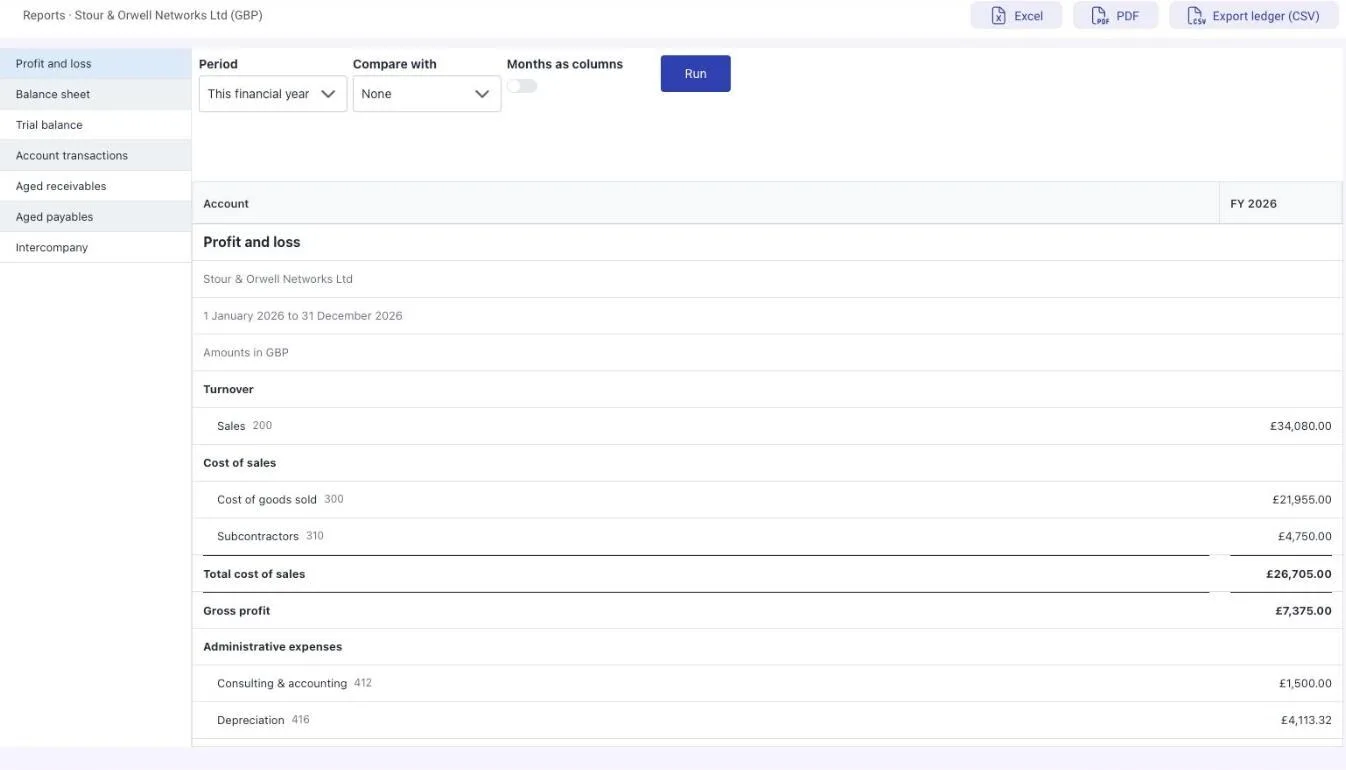
- Trial balance, profit and loss, balance sheet and account transactions by year or date range, with comparatives and monthly columns
- Aged receivables, aged payables and an intercompany report across the companies in the tenant
- Every report in Excel, PDF or ledger CSV, with the currency stated
- A Performance dashboard with KPIs against the prior year, revenue by customer and the top expense accounts
- A US tax pack that groups the trial balance to Form 1120 lines, prepares the Form 5472 schedule and lists 1099-NEC payments for a CPA
What a finance team gets
One ledger, one set of contacts, one posting path
- A default UK small-company chart of 58 accounts on Xero UK codes, seeded in one step and shared across the companies in the tenant
- Every journal validated for balance, accounts, company, open year and lock date before anything is written
- View, post and admin roles per user, enforced by the posting service and not only by the screen
- Company currency and functional currency, monthly exchange rates per pair, and realised FX posted on payment
- A clean break from Xero: journals import once, the trial balance is verified at each year end, and the invoices, payments, contacts and bank records are rebuilt behind them
- Customers, suppliers, projects, people and numbering shared with the rest of DemandFlow, so nothing is keyed twice
One Platform. Strategy to Stack.
Ready to Take Control?
Join the leading companies who have transformed their technology management with DemandFlow®.
Book a personalised demo today.