Your SIEM Does Not Know What It Is Looking At
It is 2am. An alert fires. An analyst sees a hostname, an IP, a process and a severity score. What the alert does not tell them is what the machine is, who owns it, or whether it should still be on the network at all. The SIEM is not wrong. It just has no idea what it is looking at.

It is 2am. An alert fires. An analyst opens the ticket and sees a hostname, an IP, a process and a severity score. What the alert does not tell them is what the machine is, who owns it, what it is supposed to be doing, or whether it should still be on the network at all.
To answer those questions they pivot to the asset register, which was last touched in the run up to the audit. Then to the CMDB, which has a record but no owner. Then to a directory lookup, which returns a person who left the company in March.
The SIEM is not wrong. It just has no idea what it is looking at.
The integration that everyone pays for
The standard answer is to buy a separate IT Asset Management product and integrate it with the SIEM. Field mappings get written. A nightly sync gets scheduled. An integrator gets paid. For about six weeks, it works.
Then the asset register changes shape. Or the SIEM upgrade renames a field. Or a device gets renamed in DNS but not in the asset record. The sync silently breaks. By the time anyone notices, the analyst is back to pivoting between four tools to answer the same three questions.
This is the integration tax, and most organisations have been paying it for years.
What changes when the data is one record
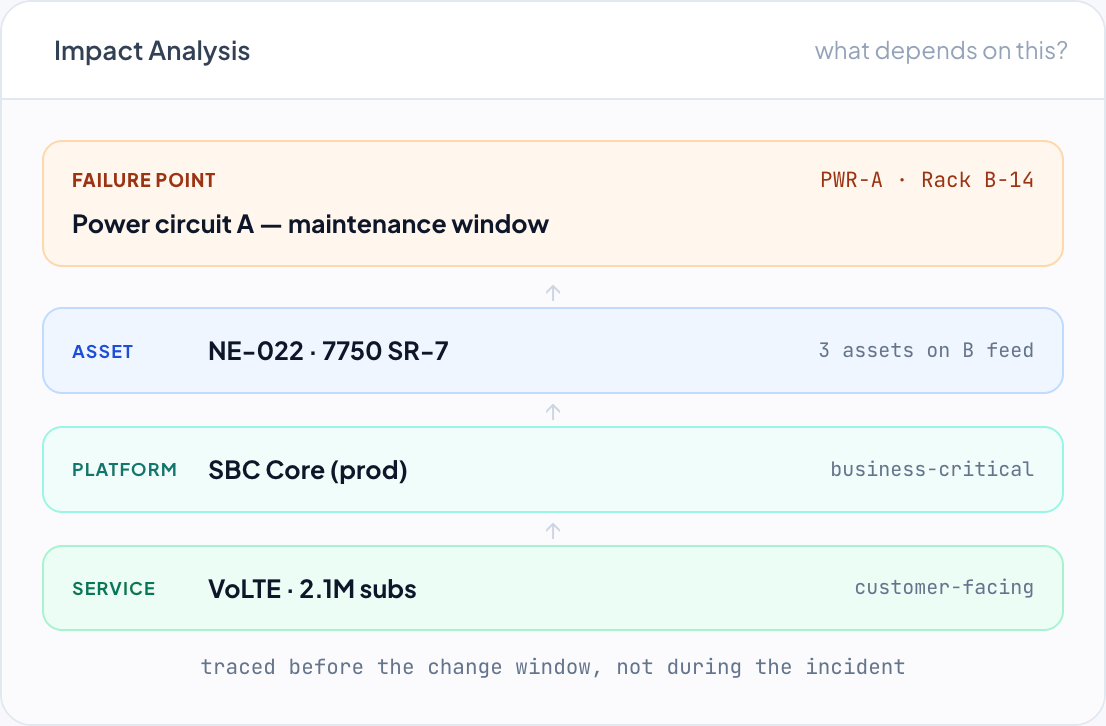
In DemandFlow the asset, the security event and the platform they belong to are not connected by an integration. They live on the same application.
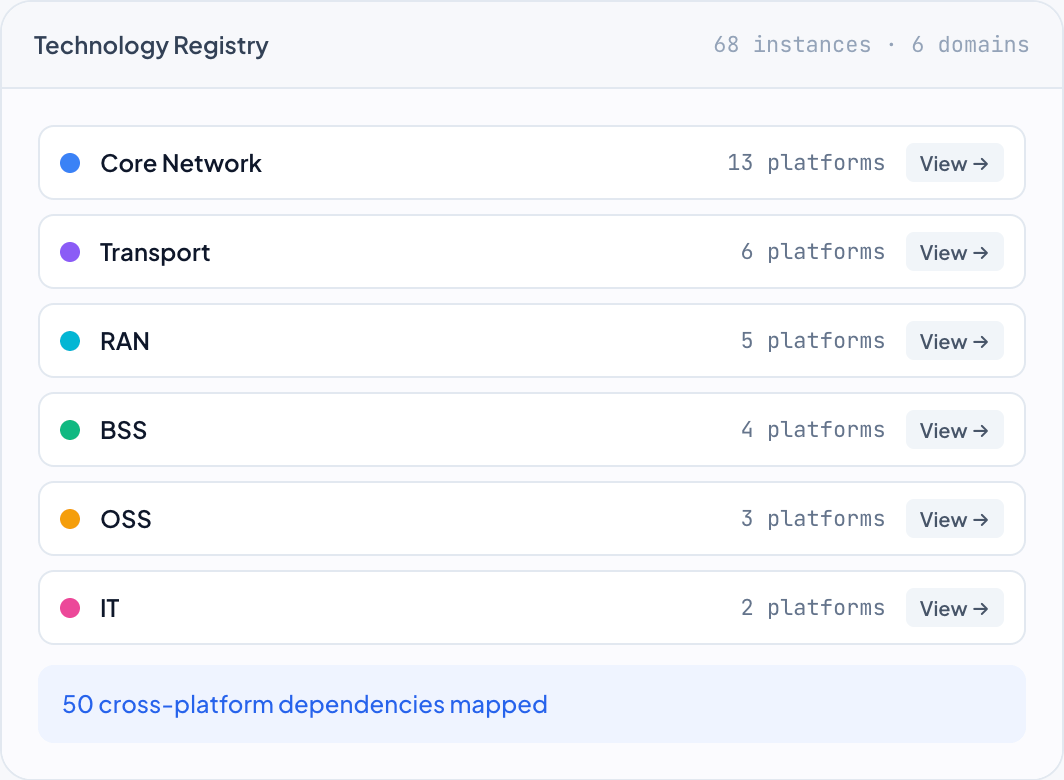
Every ingestion source carries a platform context. A stream of logs from a particular system arrives tagged with the logical platform it serves, because the source record itself is linked to that platform. Alert rules inherit it. The dashboards inherit it. A spike on the AWS estate looks like a spike on the AWS estate, not a spike on an anonymous IP range.
When an analyst escalates a single event into a ticket, it can be linked to the affected device. If it finds a matching asset, the ticket is created pre-linked to that asset, with the UI showing exactly which device was matched. If no match is found, the analyst is told so and creates the ticket anyway. There is no silent guess.
Either way, by the time the ticket is open in front of an engineer, the device record is one click away. Cost centre, assigned user, role, location, software inventory, last check-in, recent changes, open vulnerabilities, depreciation status. The pivot is gone because the data is together, not because it was preattached by a job nobody can audit.
Where this gets useful day to day
With the asset, the source and the events all in one place, a few things stop being projects.
Asset reassignment. When a person leaves a team, the device they were using needs a new owner. In a typical estate that means an update in the asset register, a ticket in the service desk, and a quiet hope that the security team will notice. Here it is one field on one record, and the security team is already looking at that record.
Audit sampling. Picking a sample of devices for a control test stops being a spreadsheet exercise and starts being a query against the live record. Where check-ins have been collected, the posture history at the date of the sample is reachable through the same record without a CSV export.
Lifecycle and source hygiene. When a device is retired, the field that records the retirement sits on the same record as the log source that was feeding it. The administrator who marks the device decommissioned has the source visible in the same view. Stale hostnames throwing alerts for months after the box left the building are a class of problem that can actually be closed, because the closing happens in one place rather than three.
The bigger point
The reason SIEM and ITAM live in separate products is historical. They were sold by different vendors, to different teams, on different budgets. There is no good reason the data should be in two places.
When it is in one place, the question at 2am stops being “what is this thing” and starts being “what do we do about it”. Which is the question worth asking.